Building a house is one of the biggest investments a person can make. From selecting the right location to choosing quality construction materials, every decision affects the safety and durability of the property. However, one of the most important steps is often overlooked: soil testing before foundation construction.
The ground beneath a building plays a critical role in determining how safely it can support the structure. Without proper soil investigation, even a well-designed house may experience settlement, cracks, uneven floors, or foundation-related problems over time.
For homeowners planning construction in Karachi, understanding soil conditions before building can help prevent expensive repairs and support safer, long-lasting construction.
What Is Soil Testing and Why Is It Important?
Soil testing is an engineering process used to evaluate the properties of the ground on which a building will stand. It helps engineers understand the soil layers, bearing capacity, groundwater conditions, and potential settlement.
The results provide essential information for designing suitable foundations and determining the appropriate construction methods.
In Karachi, soil conditions can vary from one plot to another. Factors such as previous land filling, groundwater levels, soil composition, and underlying strata can influence foundation performance. This is why relying solely on neighbouring buildings or general assumptions about an area is not a reliable approach.
A project-specific soil investigation helps engineers make informed decisions based on actual site conditions.
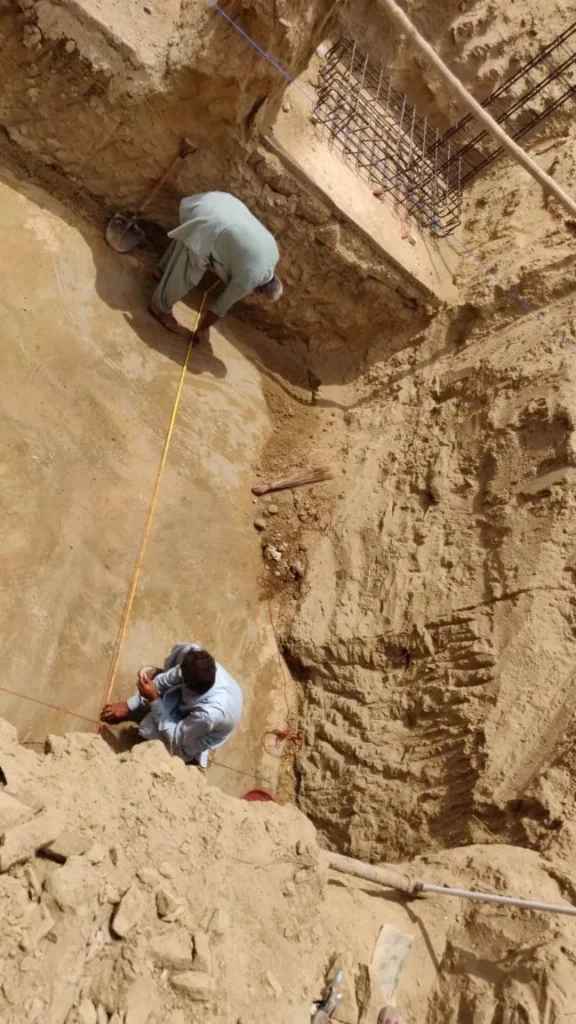
How Soil Conditions Affect Building Foundations
A foundation transfers the weight of a building to the ground. If the soil cannot safely support that load, or if it compresses unevenly, the structure may develop problems.
Two important engineering concepts help explain this relationship.
1. Bearing Capacity of Soil
Bearing capacity refers to the ability of soil to support the pressure applied by a building foundation.
If the foundation places excessive pressure on the ground, the soil may fail or deform beyond acceptable limits. A geotechnical investigation provides information that helps the structural engineer determine suitable foundation dimensions and design parameters.
2. Soil Settlement
Settlement occurs when soil compresses under the weight of a structure. Some settlement may be expected, but excessive or uneven movement can damage a building.
Differential settlement occurs when different parts of a foundation move by different amounts. It may contribute to wall cracks, uneven floors, sticking doors, and other signs of structural distress.
Proper soil investigation helps engineers evaluate settlement risks and select an appropriate foundation design.
What Is a Geotechnical Soil Investigation?
A geotechnical investigation examines the soil, rock, and groundwater beneath a proposed construction site. Its purpose is to provide reliable information for foundation design and earthwork planning.
Depending on the project, the investigation may include:
- Borehole drilling: Identifies soil layers beneath the ground surface and allows samples to be collected.
- Standard Penetration Test (SPT): Provides information about soil resistance at different depths.
- Laboratory soil testing: Evaluates relevant physical and engineering properties of collected samples.
- Groundwater assessment: Helps establish groundwater conditions that may affect excavation and foundation construction.
- Chemical testing: Identifies sulphates and other potentially harmful substances that may influence concrete durability.
The required investigation depends on the building, site conditions, and applicable engineering requirements. The findings should be reviewed by qualified professionals before foundation construction begins.
OPC or Sulphate-Resistant Cement: Which Is Better for Foundations?
Choosing the right cement is another important consideration when constructing foundations and other below-ground concrete elements.
Ordinary Portland Cement (OPC) and sulphate-resistant cement (SRC) have different applications. The appropriate choice depends on the project’s specifications and the exposure conditions identified through soil and groundwater testing.
Some soils and groundwater contain sulphates that can attack susceptible concrete over time. Where exposure levels require additional protection, engineers may specify sulphate-resistant cement or another suitable concrete durability strategy.
However, not every building in Karachi automatically requires sulphate-resistant cement. The decision should be based on measured site conditions, applicable standards, and professional engineering recommendations.
Concrete durability also depends on other factors, including the mix design, water-cement ratio, reinforcement cover, proper placement, compaction, and curing.
What Is an FDT Test in Construction?
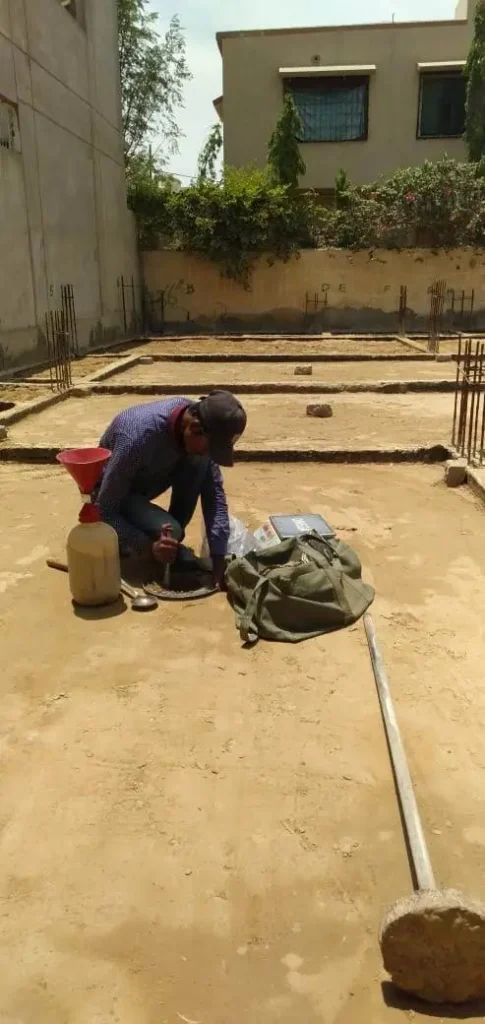
A Field Density Test (FDT) measures the in-place density of compacted soil or backfill. It helps determine whether the soil has achieved the compaction level specified for the project.
Proper compaction is particularly important when preparing the ground beneath ground-floor slabs, plinth areas, and other supported surfaces.
Poorly compacted backfill may gradually settle, reducing support beneath a floor and contributing to cracked tiles, hollow-sounding surfaces, or uneven flooring.
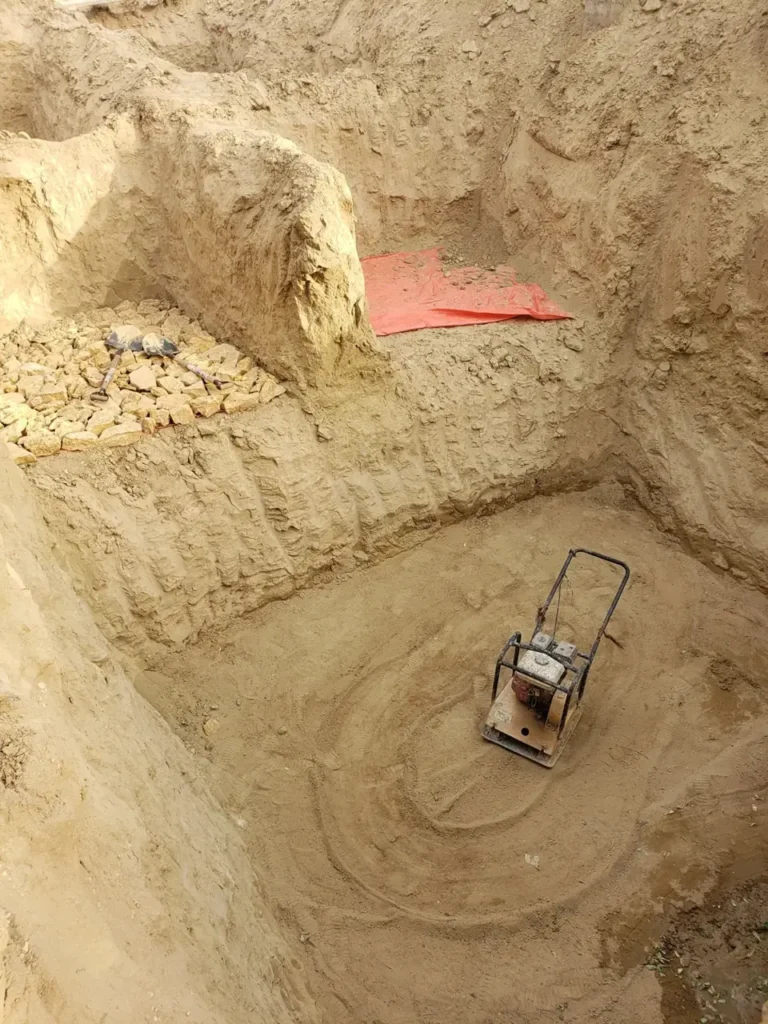
How Is a Field Density Test Performed?
One commonly used method is the sand-cone test. The general procedure includes:
- A small hole is excavated in the compacted soil.
- The removed soil is collected, weighed, and sampled to determine its moisture content.
- Calibrated sand is used to establish the volume of the excavated hole.
- The field density is calculated and compared with the relevant laboratory reference value to assess the percentage of compaction achieved.
The results are then checked against the project’s specified acceptance criteria.
Why Is Backfill Compaction Important?
Backfill should be placed in suitable layers, adjusted to an appropriate moisture content, mechanically compacted, and tested as required before the next layer is added.
Using the correct equipment is also important:
- Plate compactor: Generally suitable for open areas and granular materials such as sand and gravel.
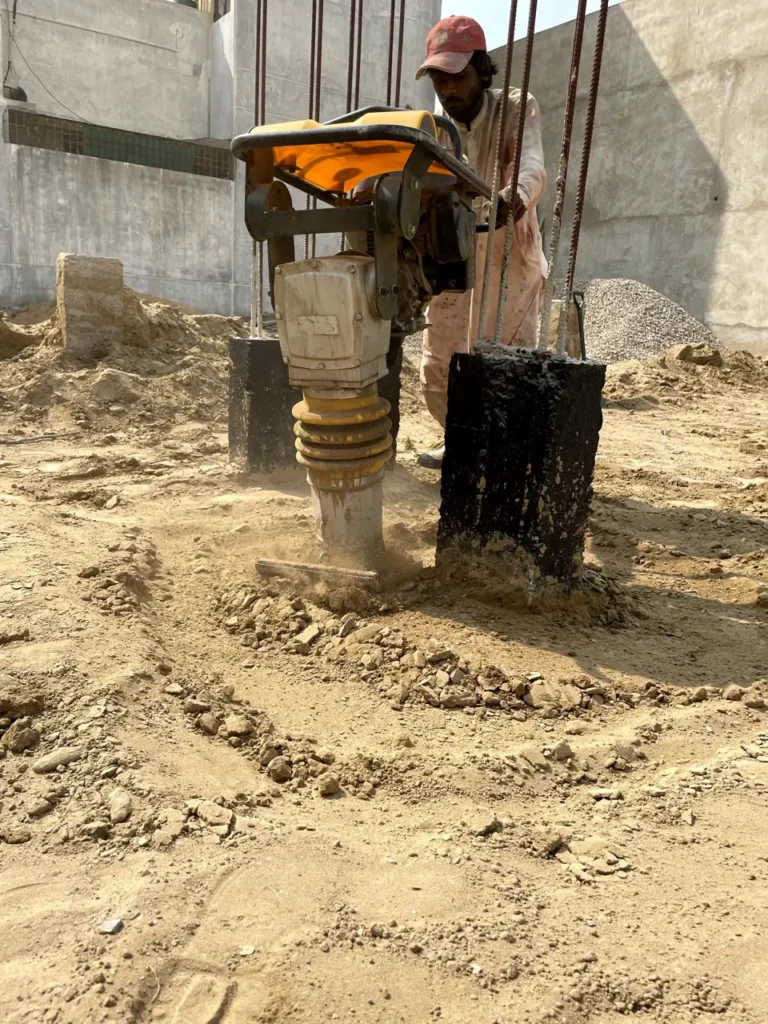
- Rammer compactor: Useful in confined spaces, including trenches and areas around columns and footings.
The equipment and procedure should match the soil type, available working space, and project requirements.
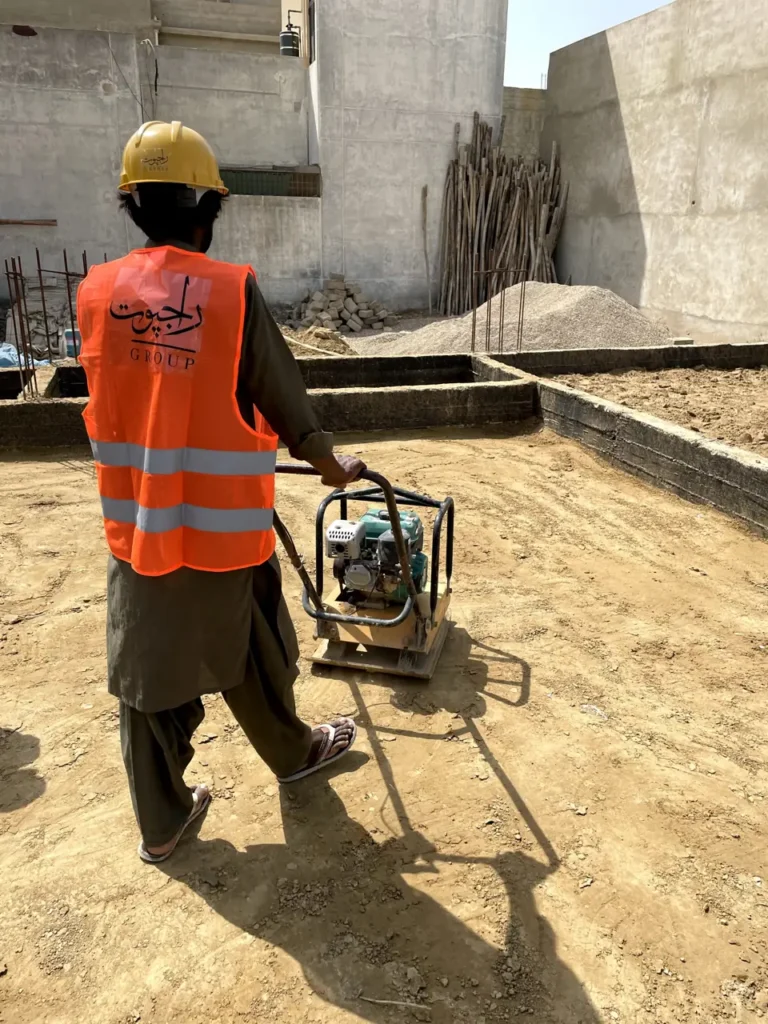
Simply operating a compactor over a thick layer of loose soil does not guarantee adequate compaction. Verification through appropriate testing is essential.
Why Are Floor Tiles Sinking or Developing Cracks?
Sinking tiles and uneven ground-floor surfaces can sometimes indicate poorly compacted backfill beneath the floor.
When loose soil gradually compresses, the floor layers above may lose support. This can cause tiles to crack, become uneven, or sound hollow when tapped.
Replacing damaged tiles without investigating the underlying cause may only provide a temporary solution.
An appropriate engineering assessment can help identify whether the problem relates to backfill settlement, the floor assembly, moisture conditions, or another underlying issue. The repair method should be selected only after the cause has been established.
Why Should Homeowners Keep Construction Testing Records?
Construction quality should be supported by evidence, not just verbal assurances that good materials were used.
Maintaining engineering records helps homeowners understand how their property was constructed and makes future inspections or investigations more effective.
Important records include:
- Soil investigation report: Documents the ground conditions considered during foundation design.
- FDT reports: Record compaction results for tested areas.
- Concrete slump test results: Indicate the workability of fresh concrete.
- Concrete cube or cylinder test reports: Document tested compressive strength.
- Steel certificates and test reports: Provide information about reinforcement grade and material traceability.
- Inspection photographs and rectification records: Show the condition of construction elements before they were covered and document corrective work.
These records can become especially valuable if cracks, settlement, or other defects appear years after construction.
Six Things to Check Before Building a House in Karachi
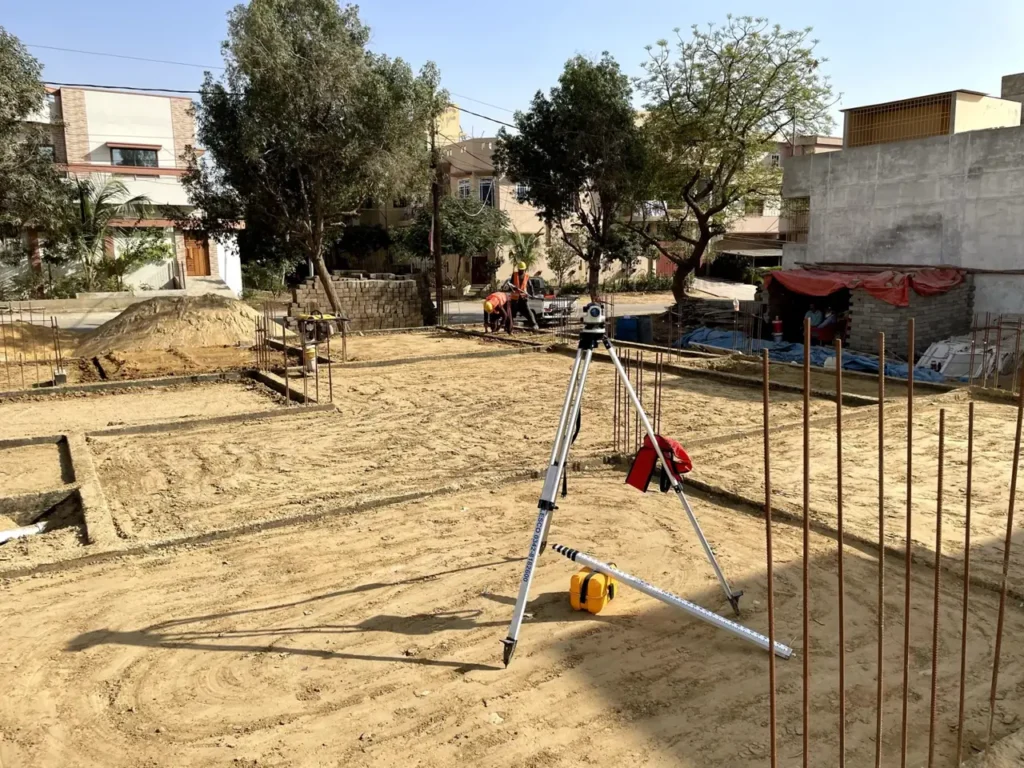
Before foundation construction begins, homeowners should discuss the following points with their architect, structural engineer, and contractor.
- Soil investigation: Has a site-specific geotechnical investigation been completed, and have its findings been considered in the foundation design?
- Foundation design: What bearing capacity and settlement parameters were used by the structural engineer?
- Cement selection: Have soil and groundwater conditions been assessed where concrete durability may be affected?
- Backfill compaction: What compaction procedure and field density testing will be used before the ground-floor slab is constructed?
- Material testing: Will concrete, reinforcement, and other required construction tests be documented?
- Independent inspection: Will the foundation, reinforcement, and backfill be inspected before these elements are covered?
Planning these checks in advance helps identify potential issues when they are easier to investigate and correct.
How StructSure Pakistan Helps Protect Your Construction Investment
StructSure Pakistan provides home and construction inspection services in Karachi, helping property owners assess construction quality and identify potential concerns at important stages of a project.
Its inspection approach focuses on reviewing visible construction conditions, identifying defects, checking relevant testing records, and assessing whether the work observed aligns with the available drawings and specifications.
Construction-stage inspections are particularly valuable before foundations, reinforcement, backfill, and other important elements become concealed. Once work is covered, examining it may become more difficult and costly.
An inspection does not replace a geotechnical investigation or the work of the responsible design engineers. Instead, it provides an additional layer of quality assurance by helping homeowners understand what has been built and what may require further attention.
Conclusion
Soil testing is an essential consideration when planning a house in Karachi. It provides engineers with information about bearing capacity, settlement, groundwater, and soil chemistry, helping them make better-informed decisions about foundation design and concrete durability.
Appropriate backfill compaction, field density testing, construction-stage inspections, and organised testing records further support construction quality.
The best time to identify a hidden construction problem is before it becomes hidden. By making soil investigation and quality checks part of the construction plan, homeowners can make more informed decisions and protect their investment for the long term.
Before you build, inspect the ground, understand the design, and verify the work.
StructSure Pakistan — Inspect Before You Invest.
For construction-stage inspection enquiries in Karachi, contact StructSure Pakistan:
- Phone: 0320 202 4444
- Email: office@structsure.com.pk
- Website: https://structsure.com.pk/