When buying a property, many people assume that a home inspection and a structural assessment are the same thing. They are not. While both can help you understand the condition of a property, they focus on different areas and serve different purposes.
Understanding the difference can help you decide which inspection you need before buying, renovating, or making major changes to a property.
What Is a Home Inspection?
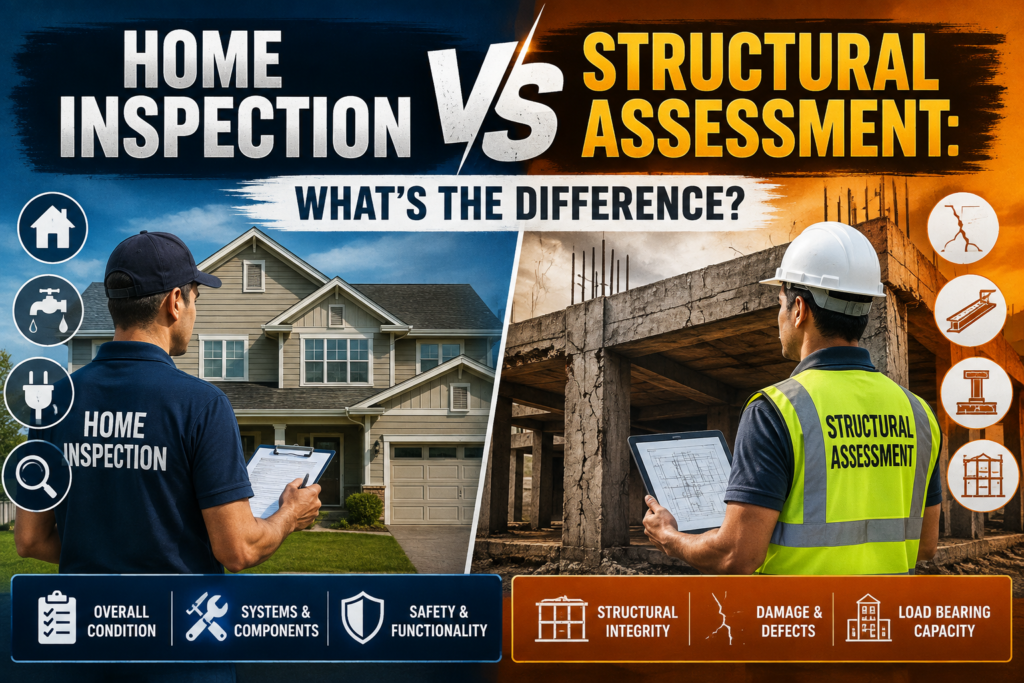
A home inspection is a general check of the property’s overall condition. It usually covers visible and accessible components such as walls, ceilings, floors, doors, windows, plumbing fixtures, electrical systems, roofing, and other building elements.
The main purpose is to identify visible defects, maintenance issues, and potential problems that could affect the property’s safety, comfort, or value.
For example, a home inspection may identify water stains on a ceiling, damaged flooring, leaking plumbing, faulty electrical outlets, or signs of moisture.
However, a general home inspection does not necessarily provide a detailed engineering evaluation of the building’s structural capacity.
What Is a Structural Assessment?
A structural assessment is a more focused evaluation performed by a qualified structural engineer. It examines the strength, stability, and safety of the building’s structural components.
Depending on the property and the reason for the assessment, a structural engineer may examine foundations, columns, beams, slabs, load-bearing walls, roofs, and visible cracks or signs of movement.
A structural assessment is especially important when you notice significant cracks, plan to remove a wall, want to add another floor, or intend to make major structural modifications.
Key Difference Between the Two
The simplest way to understand the difference is:
Home inspection = overall condition of the property.
Structural assessment = safety and performance of the building’s structure.
A home inspection can tell you that a wall has cracks, for example. A structural assessment goes further by investigating whether those cracks could indicate structural movement or another underlying issue.
When Do You Need a Structural Assessment?
You may want a structural assessment when:
- You are buying an older property.
- You notice large or growing cracks.
- Floors or ceilings appear uneven.
- You plan to remove a wall.
- You want to add a second or additional floor.
- You are planning major renovations.
- You notice signs of settlement or movement.
- You want professional advice about a suspected structural problem.
Which One Should You Choose?
In some situations, you may benefit from both. A home inspection provides a broader picture of the property’s condition, while a structural assessment gives you a deeper understanding of its structural safety.
If your main concern is cracks, load-bearing walls, foundations, structural modifications, or adding another storey, consulting a structural engineer is particularly important.
At StructSure Pakistan, structural assessments can help property owners and buyers make informed decisions before purchasing or carrying out major modifications. A professional assessment can identify potential structural concerns and help determine the appropriate next steps.
Final Thoughts
A property can look perfectly fine while still having structural concerns that are not obvious to an untrained eye. That is why understanding the difference between a home inspection and a structural assessment matters.
Before buying or significantly modifying a property, consider what you actually need to evaluate. A general home inspection can help you understand the property’s overall condition, while a structural assessment focuses specifically on the strength, stability, and safety of the structure
Also Read: What a Structural Engineer Checks During a Property Inspection