By Engr. Ahmed Rajput, PEC-registered civil engineerReviewed by Engr. Abdullah Rajput, Lead Inspector
Quick answerDamp walls (seelan) in Karachi houses usually come from more than one source at the same time: a worn roof or terrace, leaking pipes or washrooms without waterproofing, and cracked manholes or sewer lines wetting the soil. The fix is to find and stop each source before waterproofing or painting — otherwise the paint blisters within months.

Recently our team carried out a Premium Building Inspection of a split-level family house in Karachi. It was only about eight years old. The new owners had just bought it and planned two things before moving in: fresh paint and a new elevation. It looked fine on a normal visit.
Four hours, eight team members, 26 ultrasonic concrete tests, a pipe camera and a pressure gauge later, the picture was very different. We recorded 26 findings — 8 of them safety items. This article explains what we found, why it happens in so many Karachi homes, and the order in which it should be fixed. (The owner’s identity and the exact location are kept confidential.)
Key takeaways
- Water was entering the house from above, from inside and from below — all at once.
- Basement walls gave relative moisture readings of 70–100%; walls beside washrooms 60–72%.
- The water supply lost 60% of its test pressure in five minutes — a hidden leak.
- A front beam had cracks about 3 mm wide — roughly ten times what engineers treat as reasonable in humid air.
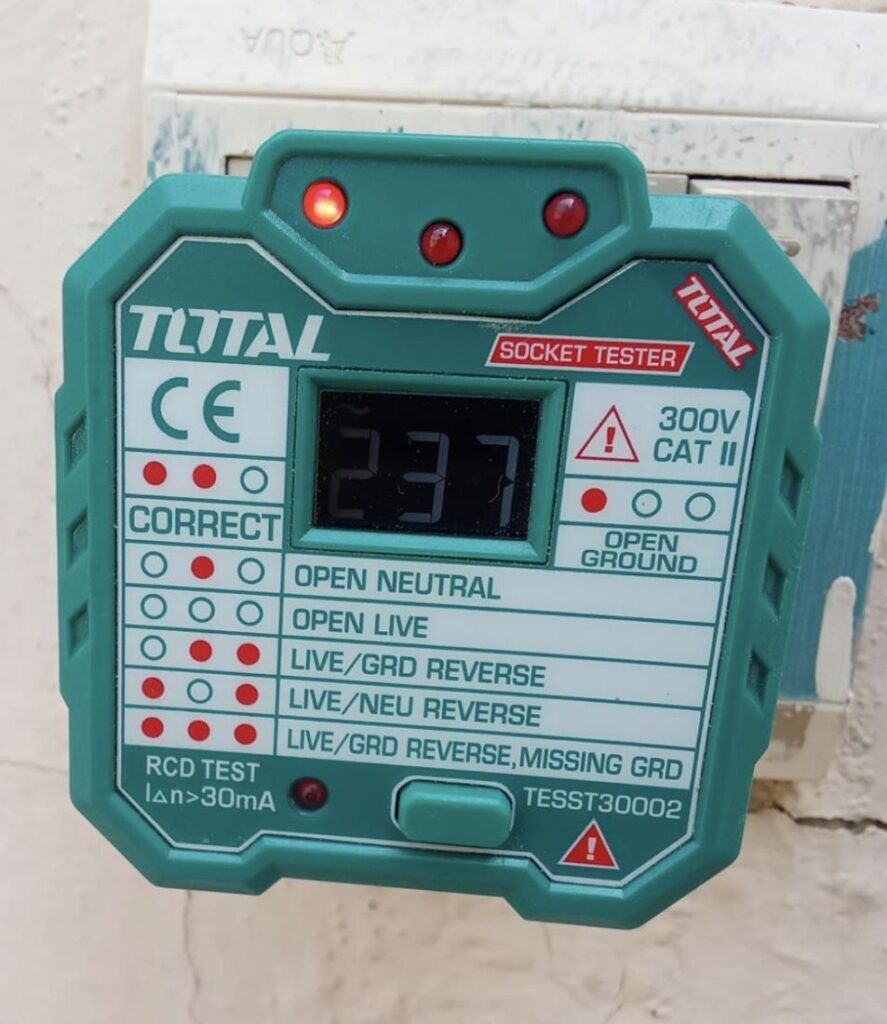
- The sockets had no earth, and gas ran through the generator to the geyser.
- Never paint first. Make safe → stop the water → repair → measure → finish.
Water from three directions: the “triple water trap”
Most homeowners look for the leak. In this house, and in many we inspect across Karachi, there isn’t one leak — there are several working together.
⬆️ From aboveAn 8-year-old roof coating with map cracking and a 3-inch hole, only one rainwater outlet, an open terrace with sunken artificial grass and no waterproofing, and unsealed skylights.
🚿 From insideA hidden supply leak, and washrooms tiled without an evident waterproof layer, so shower water soaked into the walls next door.
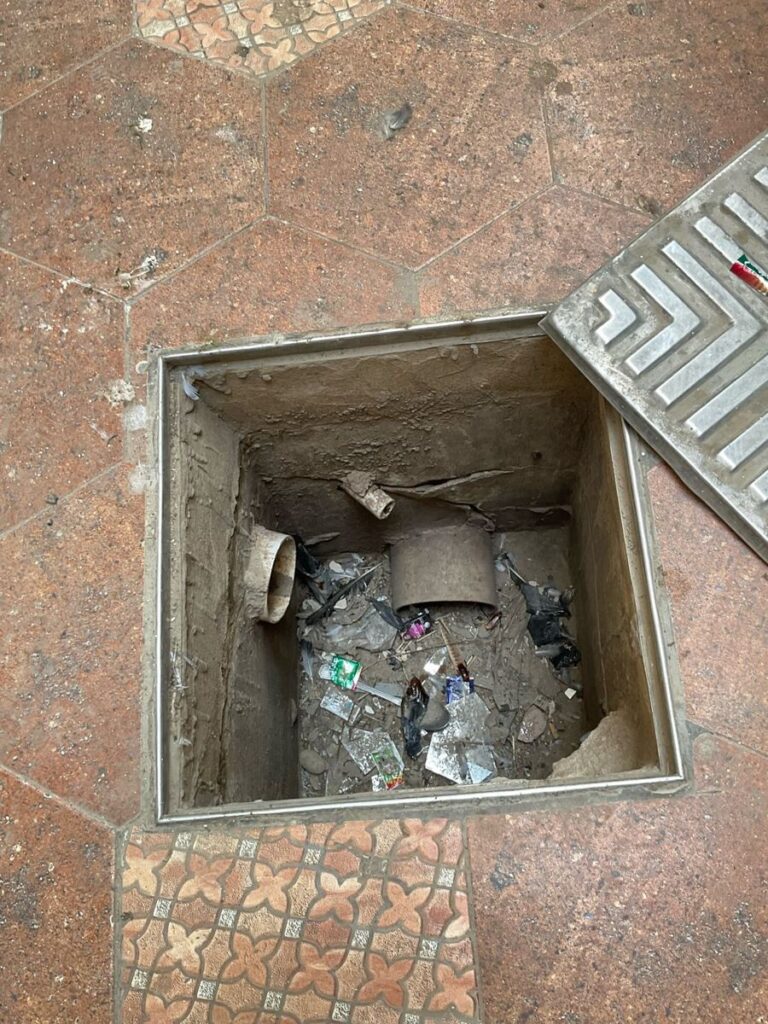
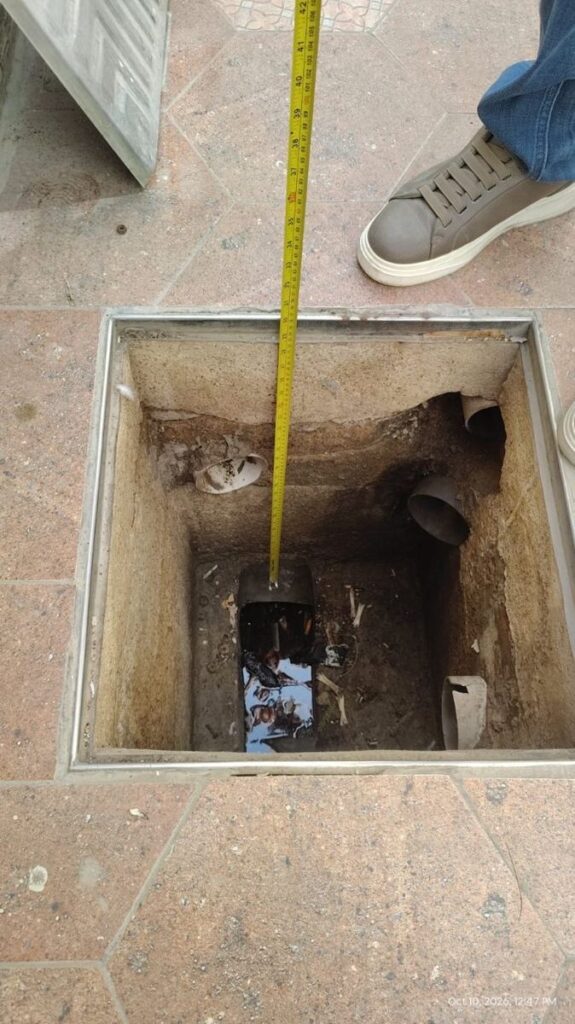
⬇️ From belowCracked manholes full of construction debris, a 6-inch sewer main that had settled and lost its slope, and water tanks with no waterproof lining.
The “sinking passage loop” why side passages crack in Karachi
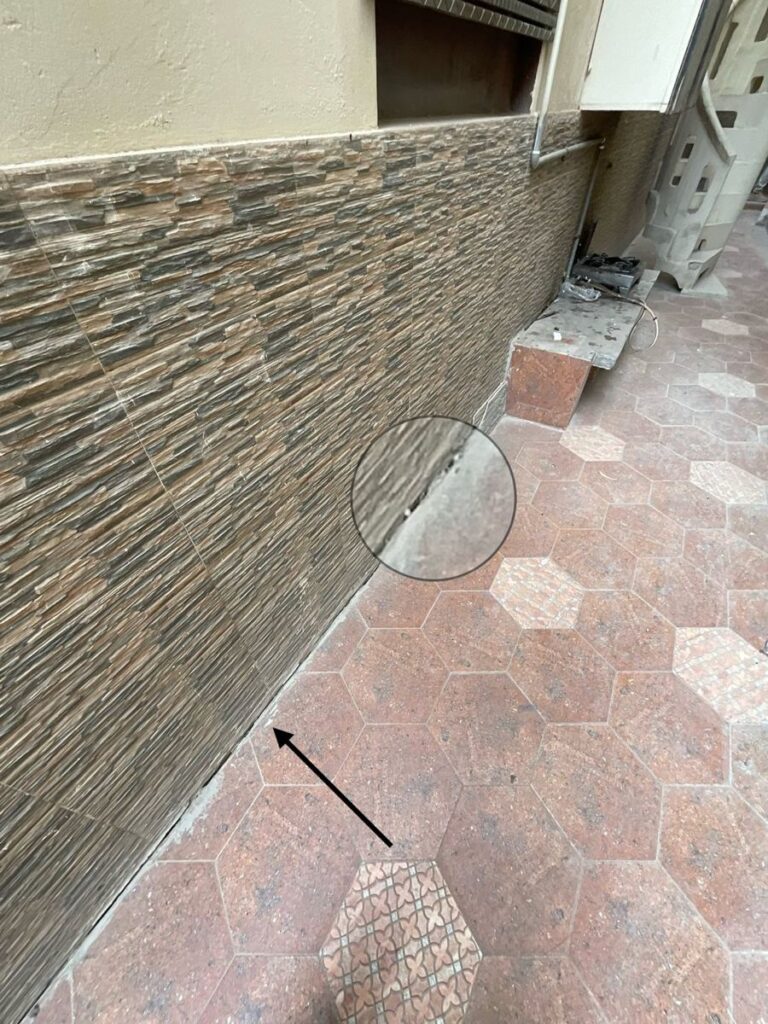
Along the side passages we found a clear gap between the floor tiles and the skirting: the paving had sunk. Inside the manhole, the main sewer pipe had sunk too.
A leaking drain under a passage washes fine soil out of the fill. The paving sinks, which cracks the pipe and manhole further, which leaks more water into the ground. It is a loop — and it ends up in your basement wall.
The fix: replace the sunken length on firm bedding at a proper fall, rebuild the manholes, and — while the passage is open — apply a bitumen coating on the outside of the basement wall as a barrier against future leaks. Keep wet work such as washing points and plant watering at least 2 ft away from the walls.
Why painting first is the most expensive mistake
The owners’ plan — paint first — is what most Karachi families do. But paint on a wall reading 60–100% moisture will bubble and peel within months. You pay for the paint, then pay again after the leaks are fixed.
Rule of thumb from our engineers: fix the source, let the wall dry, re-measure after 4–8 weeks, and only then plaster and paint. Expensive basement waterproofing is often unnecessary once the drains and pipes are fixed.
Over the front rooms, the beam had cracks about 3 mm wide near the middle, widest at the bottom and narrowing upwards. That shape is typical of a beam that is bending under load. The American Concrete Institute’s guide ACI 224R treats about 0.30 mm as a reasonable crack width for concrete in humid air — Karachi’s salty coastal air reaches the steel through anything wider.
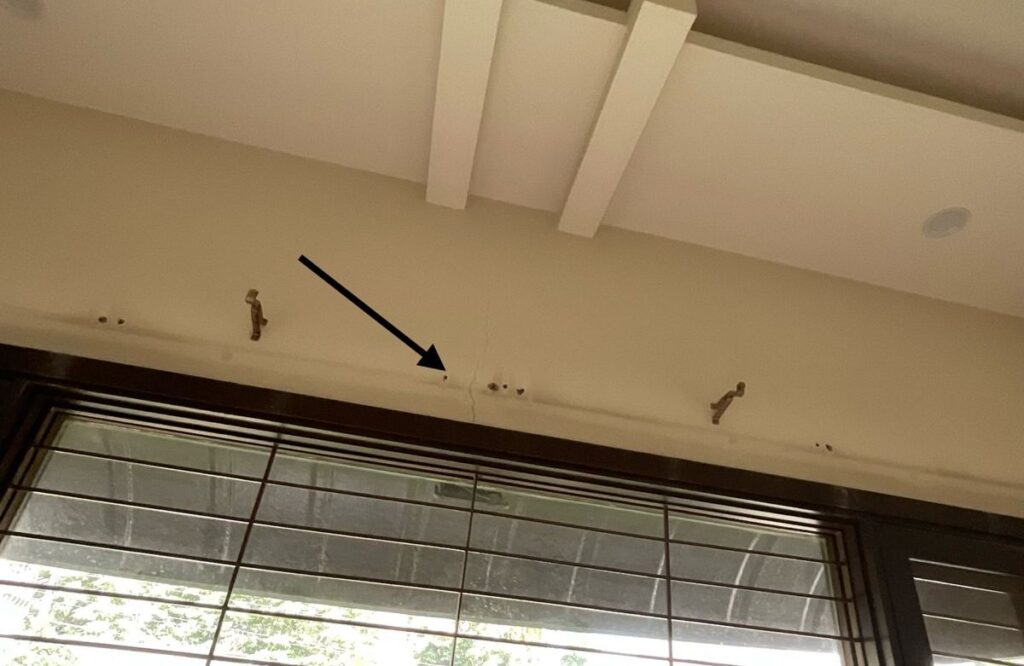
There was no visible sag, which is good news. But our lead engineer’s advice was clear: no heavy architectural or elevation changes on those two front rooms, seal the cracks with a high-strength structural crack sealer, and keep monitoring them. A heavy stone elevation fixed to a stressed beam is how a small problem becomes a big one.
The safety risks hiding in plain sight
- No earth at the sockets. The earth wire went only to the solar inverter, not to the main board. Without earth, a faulty appliance can give a shock. Fix: earth to every circuit plus a 30 mA RCD, done by a licensed electrician.
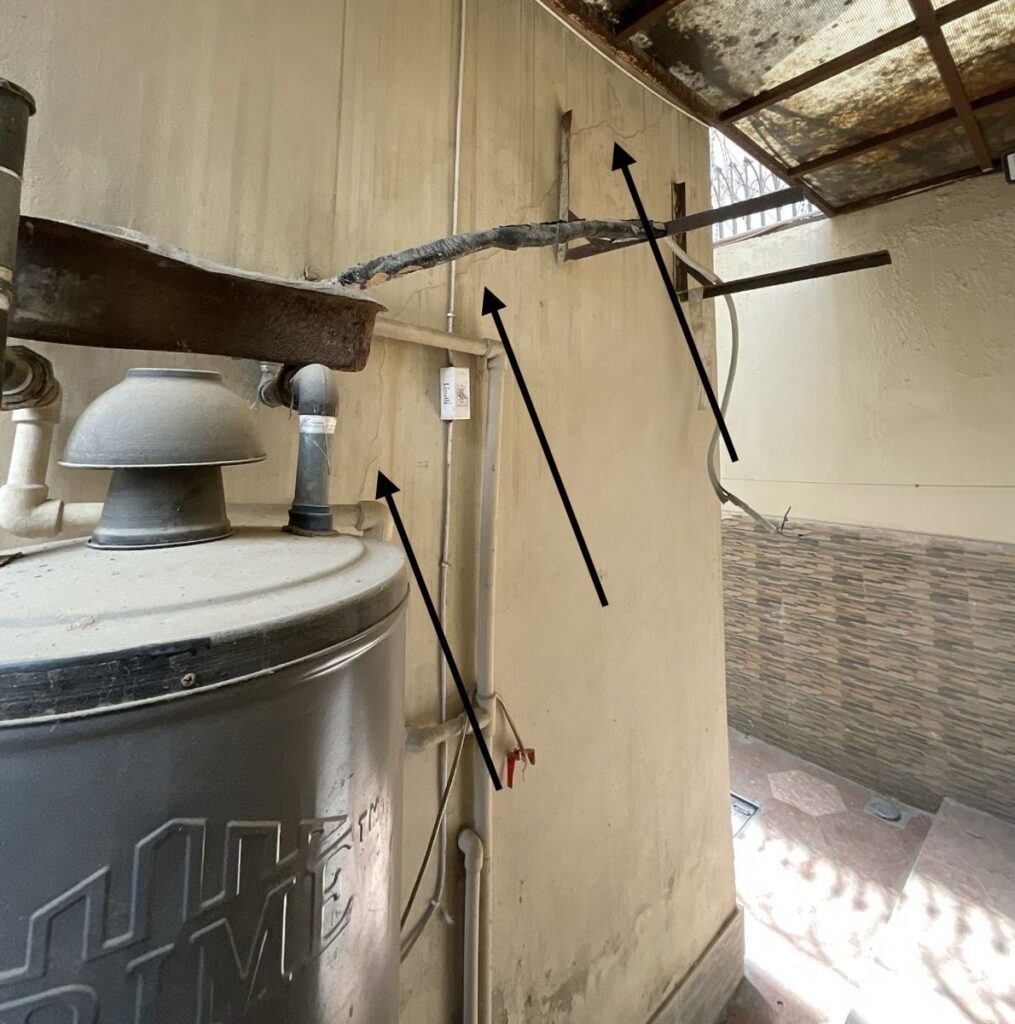
- Gas in series. Gas ran from the meter through the generator to the geyser. Each appliance needs its own branch and valve, fitted by an SSGC-approved fitter.
- A loose elevation frame on the roof with rusting ties — a risk in strong wind.
- No fire extinguishers or smoke alarms. A basic kit of extinguishers, fire balls and battery smoke alarms costs far less than most people think.
The right order to repair a house with water problems
Doing the right repairs in the wrong order is how budgets double. This is the sequence we gave the owner:
- Make safe (week 1): earthing and RCD, burnt breakers, gas branches, fire kit; prop anything damaged; secure anything that could fall.
- Find the plumbing leaks: a qualified plumber pressure-tests zone by zone. No leak found? Regrout. Leak found? Open, repair, waterproof, pond-test, re-tile.
- Fix the sewer and drains: relay sunken pipes, rebuild manholes, clean every line with a pipe camera.
- Repair concrete and line the tanks: clean rusted steel, rebuild cover, line drinking-water tanks with a potable-certified coating.
- Roof, terraces and skylights: more outlets, a reinforced membrane taken up the walls, terraces re-tiled to slope away from the structure.
- Measure: re-check moisture every two weeks for 4–8 weeks. Basement drainage only if water still gets in.
- Finish last: termite treatment, crack filling with mesh, tiles — and only then paint and the elevation.

10 signs your Karachi house may have hidden water problems
- Paint bubbling or flaking near the floor or beside washrooms
- A damp, musty smell inside wardrobes
- Gaps between floor tiles and skirting in passages
- Tiles that sound hollow when tapped, or start lifting
- Sewage smell in washrooms, especially when they are not used daily
- Water pressure dropping or the water meter running with taps closed
- Stains around skylights or on the ceiling below the roof door
- Termite trails on walls, doors or wardrobes
- Cracks where blockwork meets concrete columns or beams
- Rain water standing on the roof or terrace a day after rain
How much does fixing this cost?
Every house is different, so we never quote a number from photos. For this house, our rough estimate placed the repair and rectification cost in the high range for a home of its age — mainly because water was entering from several directions at once and the whole house needed repainting. The good news: almost every problem had a standard, proven repair, and doing the work in the right order avoids paying twice. Always get 2–3 itemised quotes per trade, and give electrical, plumbing and gas work only to certified, qualified vendors.
Also Read: Why Soil Testing Matters Before Building a House in Karachi